
What Are Depression and NPD Really? — Reflections on Psychological Diagnosis
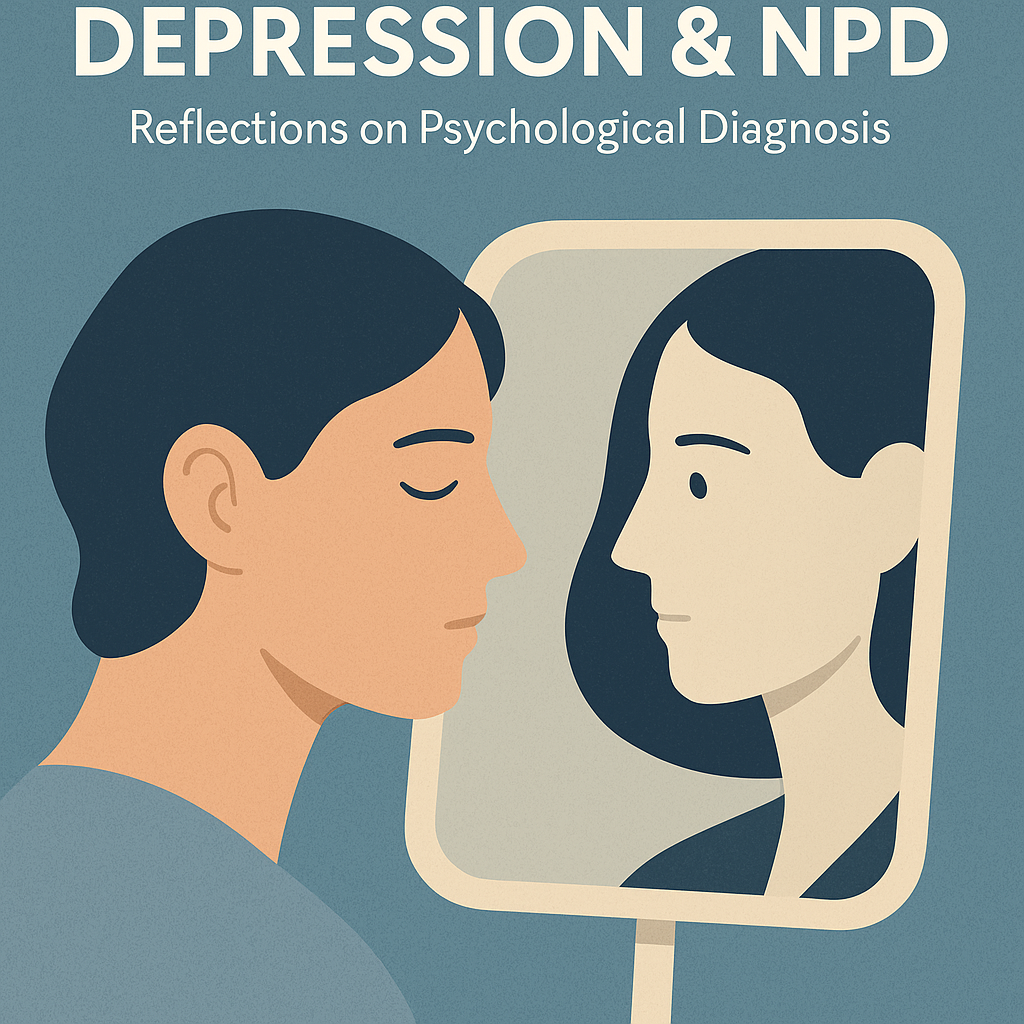
In everyday conversation and on social media, terms like “Depression” and “NPD” (Narcissistic Personality Disorder) appear frequently.
People use these labels to describe moods, relationships, or personality traits — sometimes as self-reflection, other times as judgment.
This impulse to name our experiences is deeply human. When life feels confusing or distressing, attaching a label offers a sense of clarity, control, and even comfort. Yet in clinical psychology, these labels are far more nuanced and complex than their everyday use suggests.
1. The Use of Labels in Everyday Life
When we notice emotional pain, social withdrawal, or self-centered behavior — either in ourselves or others — it’s tempting to reach for familiar words like “depression” or “narcissism.”
Labels help organize our experiences; they provide language for what otherwise feels intangible.
However, this process can oversimplify the depth of human experience. Not every period of sadness equals depression, and not every instance of self-focus indicates narcissistic pathology. The meaning behind behaviors always depends on personal history, emotional context, and relational patterns.
Naming may help, but understanding is what heals.
2. The Nature of Professional Psychological Diagnosis
From a professional standpoint, diagnosis is not a simple label, but a structured clinical judgment based on clear criteria, multiple data sources, and professional training.
The DSM-5 (American Psychiatric Association, 2013) defines each mental health disorder according to specific clusters of symptoms, duration, and functional impact.
A true diagnosis considers not only observable behaviors but also emotional depth, history, and meaning.
As psychotherapists, our goal is not merely to categorize but to understand — to see the whole person behind the diagnosis.
What has this person lived through?
How have these experiences shaped their ways of thinking, feeling, and relating?
Clinical diagnosis can be a helpful map, but it is not the entire territory.
3. A Balanced Perspective on Labels
Psychological terms are powerful tools — they can open doors to insight or close them with rigidity.
Using a diagnosis to explain complex human experiences can offer short-term clarity, but it risks obscuring the rich individuality of each person.
Every diagnosis, no matter how precise, represents an average drawn from countless cases. It highlights shared features but cannot fully describe any single individual.
As Fonagy and Allison (2014) emphasized, genuine therapeutic work requires mentalizing — maintaining curiosity about the inner world of self and others.
Thus, a balanced approach involves using labels as guides, not identities.
They can point toward helpful treatments, but true healing emerges from empathy, awareness, and connection, not from classification alone.
References
American Psychiatric Association. (2013). Diagnostic and Statistical Manual of Mental Disorders (5th ed.). APA.
Fonagy, P., & Allison, E. (2014). The Role of Mentalizing in the Development and Treatment of Attachment Pathology. Attachment & Human Development, 16(2), 121–142.
Author: Wendi Jia, LMHC, Psychotherapist at MBG Clinic.
Psychological services available in multiple languages (English, Mandarin, Cantonese, French, Turkish, etc.): 650-434-2563; admin@mindbodygarden.com. HSA/FSA accepted. Send us a text message on the phone, or call us and leave a voicemail.
Appointment & Office Locations:
admin@mindbodygarden.com
Office 1 (Los Altos)
885 N. San Antonio Rd., Suite O, Los Altos, CA 94022
Office 2 (SF)
110 Gough Street #402, San Francisco, CA 94102
Office 3 (San Diego)
9920 Pacific Heights Blvd, Suite 150, San Diego, CA 92121
Office 4 (New York)
303 Fifth Avenue, Suite 901, New York, NY 10016