Healing Trauma: Integrating the “Outside” into the Self
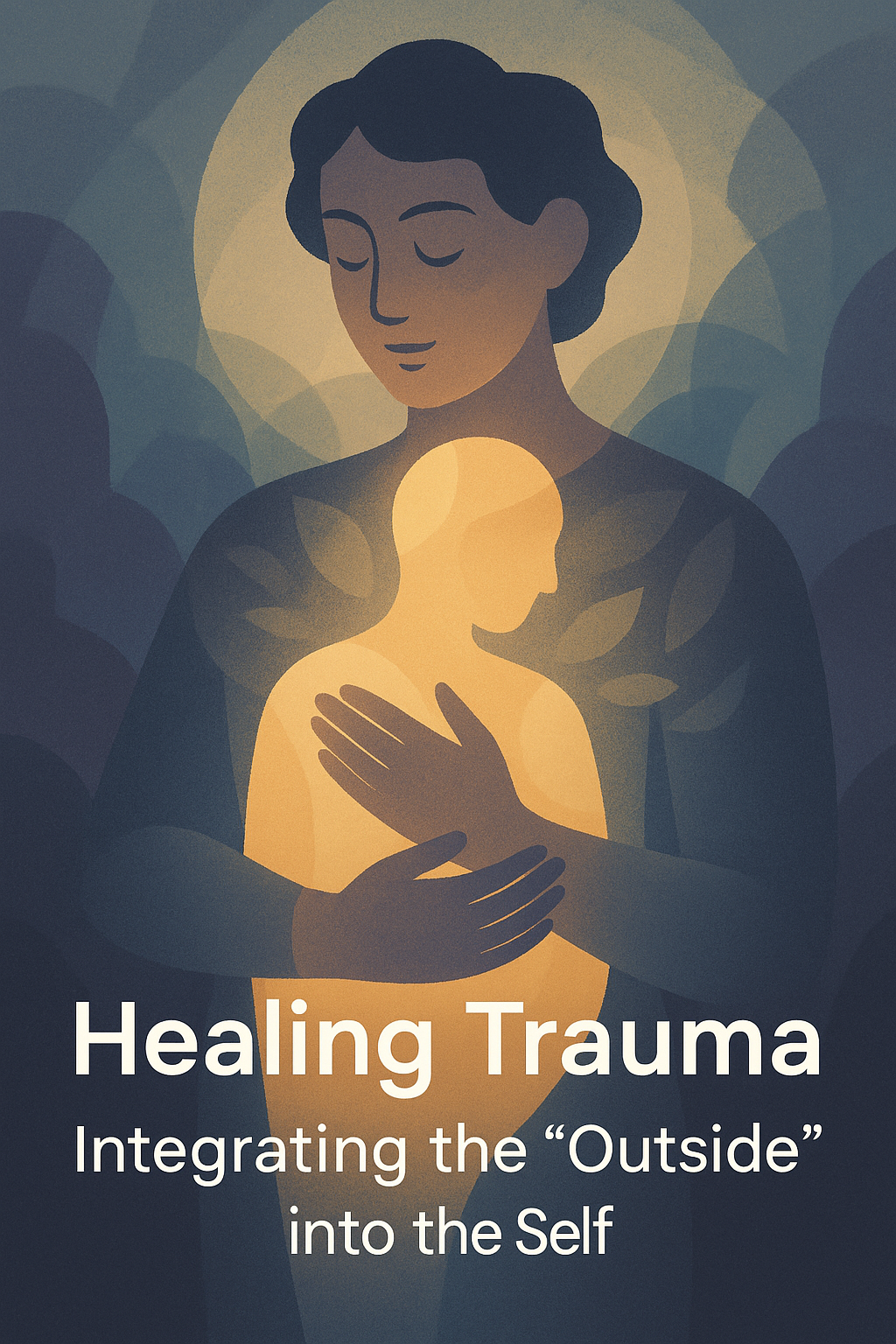
Trauma does not only wound the mind — it disrupts the coherence of the self.
Whether caused by an accident, violence, or long-term emotional strain, trauma acts like a foreign object intruding into the body-mind system. It fragments what was once whole, leaving behind disconnection, numbness, or chaos.
Healing, therefore, is not simply about “forgetting the past.” It is about integration — restoring the self’s natural wholeness and flow.
1. Understanding Trauma and the Self
The self is a complete and harmonious whole.
Externally, it manifests through the coordination of the body’s systems; internally, it appears in the balanced interaction of emotions, thoughts, and sensations.
When trauma occurs — whether through car accidents, interpersonal violence, or natural disasters — it disrupts this balance. The traumatic experience resists integration; it becomes an “unprocessed fragment” that the mind cannot fully absorb.
In cases of complex or intergenerational trauma, this disruption can persist for years or even generations.
Subtle emotional patterns, family dynamics, and learned behaviors may carry traces of unresolved pain. As psychiatrist Judith Herman (1992) observed, long-term trauma reshapes not only the individual psyche but also one’s relationships and worldview.
2. The Core Principle of Trauma Healing: Integration
At its essence, healing means finding a way to integrate what was once split off.
Integration is not about erasing painful memories, but transforming them into something that can coexist peacefully within the larger self.
This process can be uncomfortable — it may require revisiting and reinterpreting painful experiences — but it is a necessary act of self-repair.
Avoiding or suppressing trauma rarely works; unacknowledged pain continues to live in the body and mind.
As Bessel van der Kolk (2014) wrote in The Body Keeps the Score,
“The body keeps the score: if the memory is denied, the body will bear the burden.”
Like cleaning a cluttered room, true psychological healing requires us to confront and reorganize the hidden parts of ourselves.
3. Practical Strategies for Trauma Integration
The journey toward integration is personal and multidimensional, but several approaches have shown effectiveness in both research and clinical practice:
Safe expression in psychotherapy — Sharing trauma in a safe, supportive, and structured space helps regulate overwhelming emotions and promotes insight.
Emotional awareness and acceptance — Learning to notice and name emotions without suppression allows repressed energy to flow again.
Gradual exposure and narrative integration — Constructing a coherent story helps reframe the trauma within one’s life narrative, restoring continuity and meaning.
Body-based regulation — Techniques such as mindful movement, breathwork, and progressive relaxation help release trauma stored in the body.
Creative expression — Writing, art, or music can externalize internal chaos and transform pain into creativity and communication.
4. The Benefits of Integration
When trauma is acknowledged and integrated, the self begins to reclaim coherence, order, and control.
Internally, the mind feels clearer and more organized.
Externally, life regains rhythm and meaning.
This sense of inner spaciousness — where emotion, body, and thought flow in harmony — brings freedom and vitality. The past no longer dictates every reaction; instead, it becomes woven into a larger story of growth and resilience.
Healing, then, is not the absence of wounds — it is the art of living whole despite them.
References
Herman, J. L. (1992). Trauma and Recovery: The Aftermath of Violence—from Domestic Abuse to Political Terror. Basic Books.
van der Kolk, B. A. (2014). The Body Keeps the Score: Brain, Mind, and Body in the Healing of Trauma. Viking.
Courtois, C. A., & Ford, J. D. (2009). Treating Complex Traumatic Stress Disorders (Adults): Scientific Foundations and Therapeutic Models. Guilford Press.
Author: Wendi Jia, LMHC, Psychotherapist at MBG Clinic.
Psychological services available in multiple languages (English, Mandarin, Cantonese, French, Turkish, etc.): 650-434-2563; admin@mindbodygarden.com. HSA/FSA accepted. Send us a text message on the phone, or call us and leave a voicemail.
Appointment & Office Locations:
admin@mindbodygarden.com
Office 1 (Los Altos)
885 N. San Antonio Rd., Suite O, Los Altos, CA 94022
Office 2 (SF)
110 Gough Street #402, San Francisco, CA 94102
Office 3 (San Diego)
9920 Pacific Heights Blvd, Suite 150, San Diego, CA 92121
Office 4 (New York)
303 Fifth Avenue, Suite 901, New York, NY 10016