
How to Communicate Effectively with Your Child: Practical Tips from the Stanford Parenting Course (Part 4)
🗣 Why Communication Matters
In this session of the Stanford Parenting Course, the speakers introduced several DBT-based communication strategies—including the use of reinforcement—to help parents strengthen their connection with children.
Behavioral learning theory shows that positive reinforcement (warmth, praise, attention, or interest) increases the likelihood of desired behaviors, while punishment (criticism, withdrawal, or coldness) tends to suppress behavior but often damages trust.
The key to reinforcement is timing — respond immediately after the behavior you want to encourage.
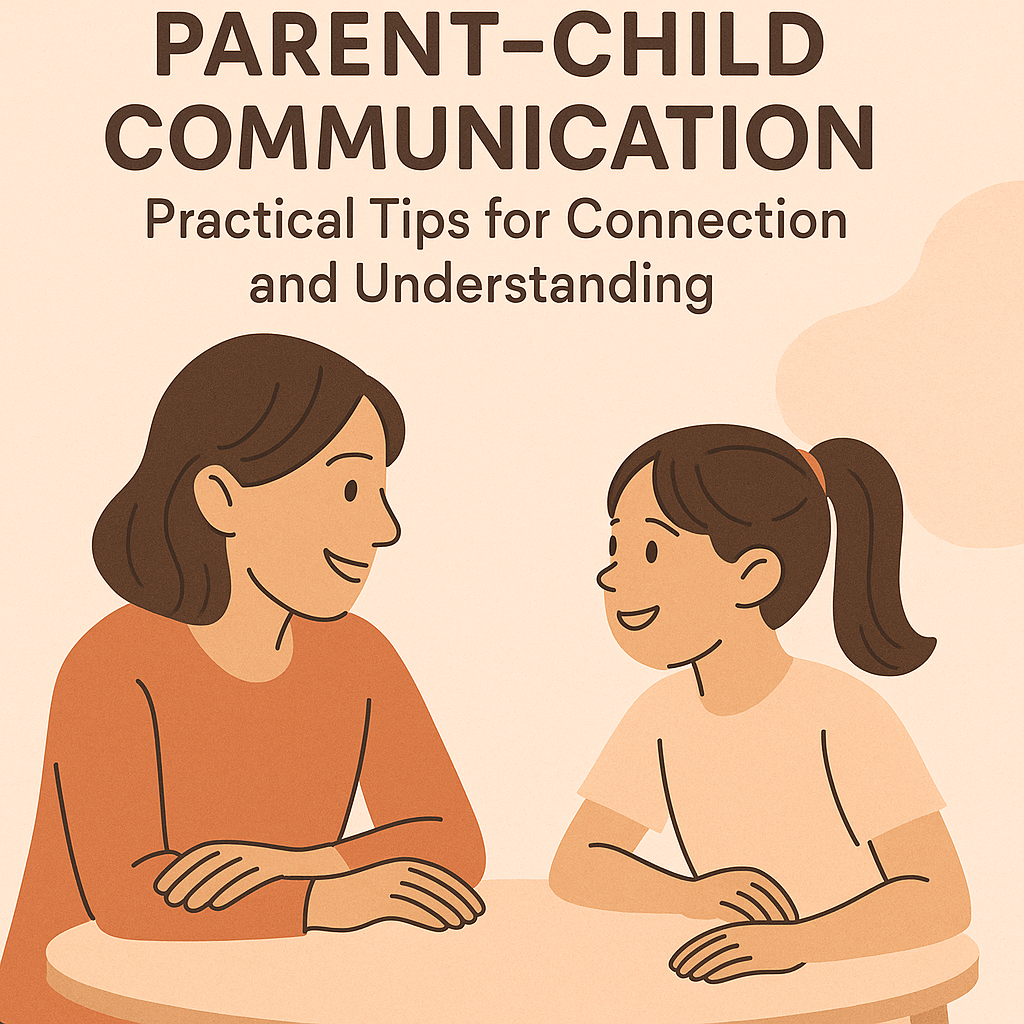
🌱 Behaviors Worth Reinforcing
Parents can reinforce behaviors such as:
Expressing feelings and emotions
Asking for help appropriately
Engaging in positive social interactions
Spending quality time together
These everyday moments are opportunities to strengthen your child’s emotional resilience and confidence.
💞 The Foundation of Communication: Validation
The first step to effective communication is validation — acknowledging and accepting your child’s feelings, even when you don’t agree with their perspective.
In therapy, we often teach: “You can disagree, but still accept.” Validation is not the same as agreement — it means listening, showing understanding, and recognizing the child’s emotions as real and meaningful.
If children feel understood, they are far more likely to open up and cooperate.
💡 Parent Tip:
Instead of arguing about whether you truly “understand” them, admit it honestly if you don’t:
“I may not make the same choice you would, but I’m trying to understand how you feel.”
Convey: “Your feelings matter to me, and they make sense.” Often, what soothes a child most is not your advice — but your presence, tone, and empathy.
🧩 Generational Differences in Communication
Parents often emphasize:
Suppressing emotions
Staying strong and resilient
Saving face and solving problems
Meanwhile, children value:
Emotional recognition and encouragement
Freedom to express feelings
When a child shares negative emotions, many parents instinctively try to “fix” things or offer advice. The intention is loving—but the timing may backfire.
Children often interpret premature advice as “You don’t get me.”
✅ Instead: Focus first on validation.
Acknowledging emotions builds connection. Once emotions settle, problem-solving becomes natural.
🪞 How to Validate Your Child’s Feelings
1️⃣ Show interest — Use eye contact, body language, and presence.
2️⃣ Reflect what you hear — “You feel frustrated because…”
3️⃣ Explain why their feelings make sense — Link emotions to context.
4️⃣ Normalize — “Anyone would feel that way in your situation.”
5️⃣ Personalize — Highlight why this is meaningful for your child.
Example:
Child: “I’m really sad because my best friend is moving away.”
Parent: “I understand — she’s your closest friend, and you spend so much time together. Anyone would feel sad if someone special suddenly left.”
When a child feels understood, emotional tension decreases — and the relationship strengthens.
🚫 What to Avoid When Validating
Explaining why they shouldn’t feel that way
Jumping into problem-solving immediately
Saying “Everything will be fine” too early
Comparing them with others
Justifying your own behavior (“I did this because I care about you”)
Criticizing their tone or reaction
Your goal is connection before correction.
💬 Common Questions from Parents
Q1: How can I teach my child to be strong without invalidating their feelings?
Many parents equate strength with suppressing emotions. However, true resilience comes from processing, not avoiding, pain.
Telling a struggling child “Be strong” may unintentionally make them feel ashamed for having emotions. Instead, say:
“I know this is hard. You’re showing strength by facing it and sharing it.”
Helping children see that emotions change over time — “What I feel now is not what I will always feel” — fosters hope and emotional flexibility.
Q2: What if my child says ‘You don’t understand me’?
Stay calm and accept the response:
“You’re right, maybe I don’t fully understand, but thank you for telling me.”
You don’t need to defend yourself — acceptance itself builds safety.
Q3: How should I respond if my child is rude or disrespectful?
Timing matters. If your child is in an emotional high, no lecture will work. Wait until both of you are calm, then discuss boundaries and mutual respect.
Sometimes natural consequences are the best teacher — letting a child experience the results of their choices can be more powerful than repeated reminders.
Q4: What if my child refuses therapy?
Show genuine curiosity instead of pressure.
“I can tell you’re not happy. I imagine it’s frustrating for us to argue about this. I’m sorry it feels that way.”
Once the child feels heard, discuss options collaboratively. You can offer choices — “Here are two therapists you could meet; you can decide who feels right.” Giving autonomy increases cooperation.
🌻 Final Thoughts
Effective communication is not about control — it’s about connection. Validation builds trust; trust opens the door for growth.
As one speaker summarized beautifully:
“Build your child up while acknowledging their feelings.”
When parents lead with understanding rather than correction, children learn to express emotions safely, recover from distress faster, and develop long-term resilience.
If you or someone you love is struggling with grief or depression, please seek help from a licensed mental health professional. At Mind & Body Garden Psychology, we’re committed to providing a safe, bilingual space for youth and families to grow stronger together. If you’re concerned about your teen’s mental well-being or would like to learn more about therapy options, contact us today or explore our blog for more resources.
Psychological services available in multiple languages (English, Mandarin, Cantonese, French, Turkish, etc.): 650-434-2563; admin@mindbodygarden.com. HSA/FSA accepted. Send us a text message on the phone, or call us and leave a voicemail.
Appointment & Office Locations:
admin@mindbodygarden.com
Office 1 (Los Altos)
885 N. San Antonio Rd., Suite O, Los Altos, CA 94022
Office 2 (SF)
110 Gough Street #402, San Francisco, CA 94102
Office 3 (San Diego)
9920 Pacific Heights Blvd, Suite 150, San Diego, CA 92121
Office 4 (New York)
303 Fifth Avenue, Suite 901, New York, NY 10016