
Understanding the Mental Health Challenges of Asian American Youth: Insights from the Stanford Parenting Course (Part 3)
🧠 Mental Health in Asian American Youth
According to large-scale U.S. studies, about 41% of Asian Americans experience symptoms of anxiety or depression during their lifetime. The lifetime prevalence of any mental disorder is around 17.3%, yet Asian Americans are three times less likely to seek mental health care compared to White Americans.
Among Asian Americans, suicide ranks as the eighth leading cause of death, and young adults between ages 18–34 have the highest rates of suicidal ideation and attempts.
Suicidal thoughts (ideation): 11.9%
Suicidal intent: 4.4%
Suicide attempts: 3.8%
U.S.-born Asian American women report even higher rates of suicidal thoughts (15.9%) than the general population. Asian American college students are also more likely to experience suicidal ideation or attempts than their White peers.
⚖️ Understanding Types of Suicidal Ideation
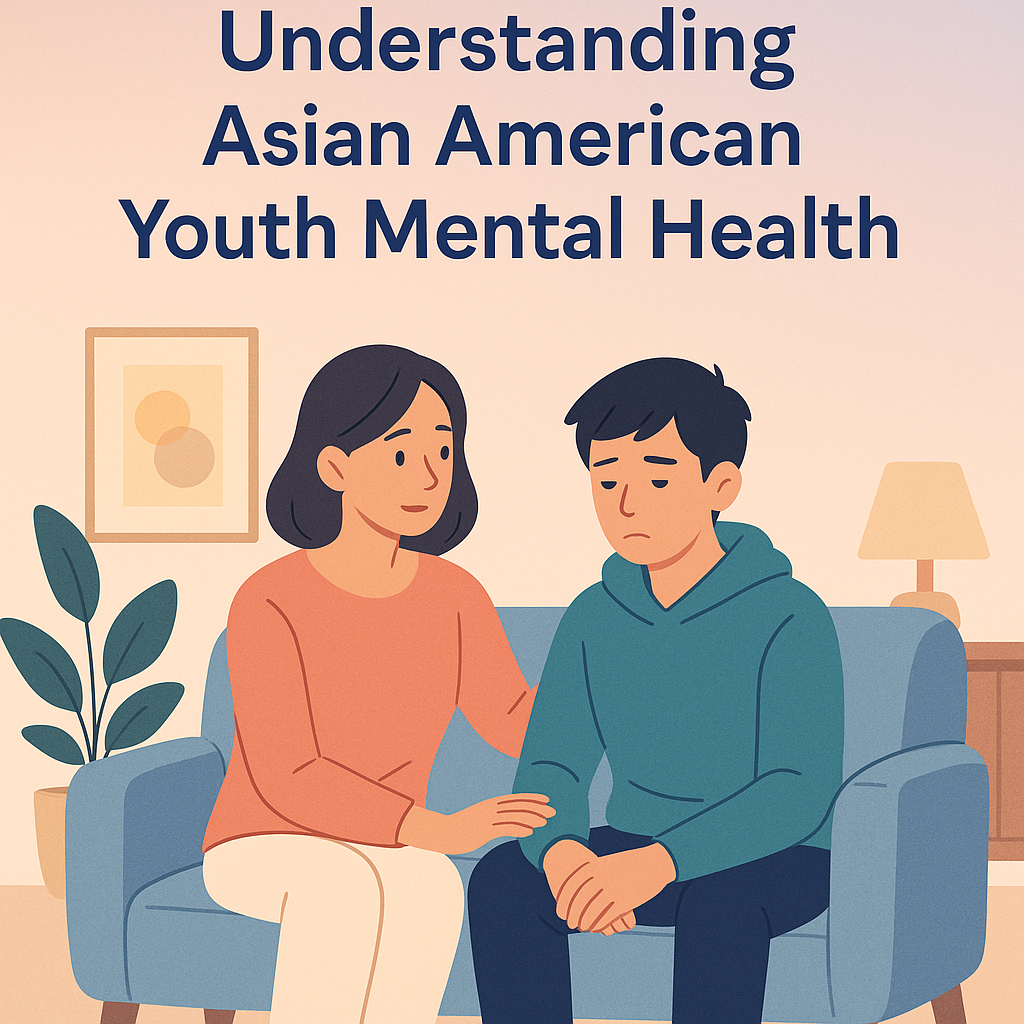
When a child says “I want to die” or “Life doesn’t feel worth living,” it’s important for parents not to panic—but to take it seriously. Suicidal thoughts can be passive or active, and each requires a different response.
1️⃣ Passive Suicidal Ideation
This includes wishing to disappear or not exist, without a specific plan.
Examples:
“I wish I could just stop existing.”
“It might be easier if I wasn’t here.”
Even without a plan, passive suicidal thoughts signal deep emotional distress that requires attention and support.
2️⃣ Active Suicidal Ideation
This involves specific plans or intent to end one’s life. It’s a high-risk situation requiring immediate action. Parents should ask calmly and directly:
Do you have a plan for how you would do it?
Have you gathered any tools or means?
These questions don’t increase risk—they help assess danger and ensure safety.
⚠️ Suicide Risk and Protective Factors
Mental health professionals assess suicide risk across three levels: individual, interpersonal, and community.
Risk factors:
Individual: past suicide attempts, depression, hopelessness, perfectionism, access to lethal means
Relational: bullying, isolation, family suicide history, relationship loss, violence
Community: limited access to mental health care, cultural stigma, high-pressure environments
Protective factors:
Individual: coping skills, sense of purpose, strong cultural or spiritual identity
Relational: supportive family and peers
Community: access to care and belonging within a community
Establishing connection (linkage)—whether with family, friends, teachers, or therapists—is one of the strongest protective factors for youth.
🚨 Recognizing Warning Signs
Verbal warning signs:
“I’m a burden.”
“I can’t handle this pain.”
“I don’t want to live anymore.”
Feeling hopeless, ashamed, or angry.
Behavioral changes:
Withdrawing from family or friends
Giving away valued belongings
Drastic changes in sleep or appetite
Reckless or impulsive behavior
Saying goodbye to people
Visible sadness, irritability, or despair
❌ Common Parental Mistakes
In many Asian cultures, suicide and mental illness are taboo topics. Parents may not know how to respond, leading to two extremes: underresponding or overresponding.
Underresponding:
Ignoring emotional or behavioral changes
Dismissing suicidal comments
Saying “You’ll be fine” or “Don’t think that way”
Expecting them to “get over it”
Overresponding:
Panicking, crying, or showing overwhelming guilt
Demanding immediate explanations
Calling 911 impulsively without assessing
Showering sudden affection, lowering boundaries drastically
Both extremes can harm communication. Overreaction may even unintentionally reinforce suicidal behavior by linking it with parental attention or guilt.
🧩 How to Respond to Suicidal Statements
If your child expresses suicidal thoughts:
Stay calm and present.
Acknowledge their pain. (“That sounds really painful. I’m here with you.”)
Keep communication open.
Avoid lecturing or moral judgment.
Seek professional help early — psychologists, psychiatrists, crisis lines.
💬 Important: Asking about suicide does not increase the risk.
Avoid excessive questioning; instead, pay attention to emotions and behaviors.
Seek immediate help (call 988, 911, or go to the nearest emergency room) if:
The child has a plan or means of suicide.
The child expresses intent to harm self or others.
Safety is in doubt.
🧠 Example Case
Scenario:
Your daughter tells you she feels hopeless and wants to die, then locks herself in her room.
How should you respond?
A) Ignore her and wait for her to calm down.
B) Yell and demand she open the door.
C) Break down emotionally and plead with her not to do it.
D) Stay nearby, calmly monitor, and speak gently through the door.
✅ Answer: D.
This approach shows steady presence and care without panic or aggression.
💬 Parental Q&A
Q1: What if I notice another family’s child showing warning signs, but the parents deny it?
Try to reduce stigma around mental health. Encourage open dialogue—“Talking to a therapist doesn’t mean something is wrong; it’s a form of support.”
Q2: What if a controlling parent won’t seek help, but the child is struggling?
We can’t force others into therapy, but psychologists can help the child:
Build confidence and self-expression
Learn coping skills
Navigate communication challenges with family
Q3: What if my child doesn’t trust any therapist?
Not every therapist is a good fit. Finding the right one takes time and trial.
Meanwhile, parents can improve emotional connection at home—normalize therapy, share your own learning, and demonstrate openness.
Sometimes, when parents start therapy themselves, children become more willing to try.
❤️ Final Takeaway
Supporting Asian American youth requires cultural sensitivity, emotional openness, and proactive care. Avoid judgment, stay curious, and keep the connection strong.
When parents and children rebuild trust and communication, the risk of crisis decreases—and healing becomes possible.
If you or someone you love is struggling with grief or depression, please seek help from a licensed mental health professional. At Mind & Body Garden Psychology, we’re committed to providing a safe, bilingual space for youth and families to grow stronger together. If you’re concerned about your teen’s mental well-being or would like to learn more about therapy options, contact us today or explore our blog for more resources.
Psychological services available in multiple languages (English, Mandarin, Cantonese, French, Turkish, etc.): 650-434-2563; admin@mindbodygarden.com. HSA/FSA accepted. Send us a text message on the phone, or call us and leave a voicemail.
Appointment & Office Locations:
admin@mindbodygarden.com
Office 1 (Los Altos)
885 N. San Antonio Rd., Suite O, Los Altos, CA 94022
Office 2 (SF)
110 Gough Street #402, San Francisco, CA 94102
Office 3 (San Diego)
9920 Pacific Heights Blvd, Suite 150, San Diego, CA 92121
Office 4 (New York)
303 Fifth Avenue, Suite 901, New York, NY 10016