
How to Recognize Early Warning Signs of Mental Health Problems
1. Living Under Constant Pressure: The New Normal
Remember the early days of the pandemic, when isolation was mandatory and stepping outside felt like a luxury? Anxiety, fear, and loneliness filled the air. Even though life has returned to “normal,” many still carry a lasting sense of psychological tension.
Now, amid economic uncertainty, social instability, and information overload, we face a new era of chronic stress. The combination of nonstop news, AI-driven productivity, and remote work has made mental exhaustion widespread.
Healthcare workers, educators, service professionals, and caregivers remain at high risk of psychological burnout. Meanwhile, global instability and financial pressure have turned chronic anxiety into an invisible modern epidemic.
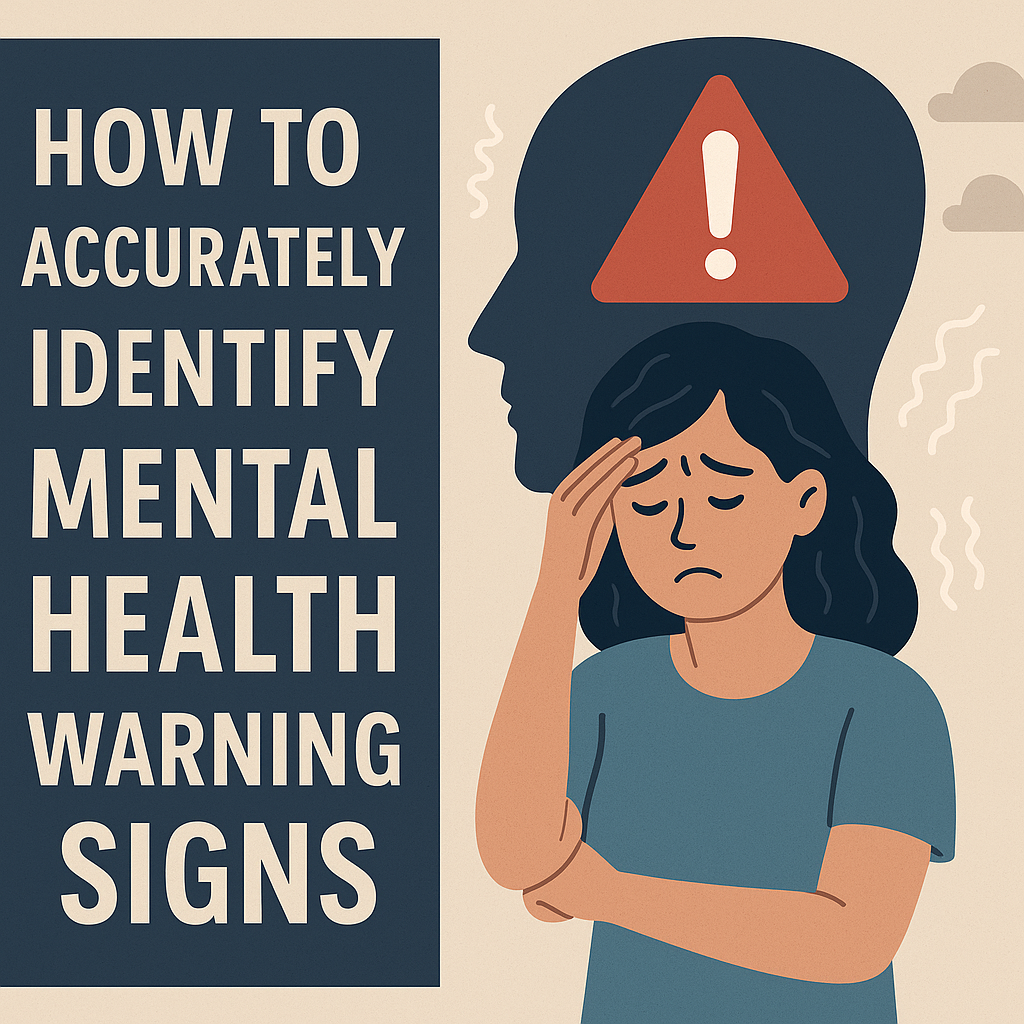
A strong support system—family, friends, therapy, or community resources—remains one of the best predictors of resilience and mental well-being.
2. Habits Reveal How We Handle Stress
“How do I respond when I feel anxious or exhausted?”
Since the pandemic, people have become more aware that mental health is not just about crisis management—it’s an everyday practice. Yet our coping habits are shaped by culture and upbringing.
Some people suppress emotions to avoid “bothering” others. Some distract themselves but never truly process what they feel.
Expressions like “I’m burned out,” “I can’t socialize,” or “I’m mentally drained” reflect a growing sense of psychological fatigue. When we lose motivation to connect, work, or even care about daily life, it’s time to pause and ask:
“Am I just tired, or am I emotionally exhausted?”
3. Everyone Has Different Levels of Resilience
“Have my challenges exceeded what I can handle?”
Research shows that genetics, personality traits, physical health, and social environment all shape psychological resilience.
Groups at higher risk include:
People living alone or away from family
Cross-cultural professionals and immigrants
Single parents or primary caregivers
Young remote workers facing isolation
In an increasingly efficient yet fragmented society, emotional disconnection is often the deeper cause of distress—not just life’s events themselves.
4. Psychological Warning Signs Go Beyond “Feeling Sad”
Mental-health struggles don’t always look like classic depression or anxiety. Early warning signs can include:
Difficulty falling or staying asleep
Loss of interest in things you used to enjoy
Irritability, sudden crying, or emotional ups and downs
A sense of emptiness or hopelessness about the future
Trouble concentrating or decreased work performance
Persistent worry about health, finances, or the world
Compulsively checking your phone or social media, only to feel worse
If these symptoms last for two weeks or more and interfere with daily functioning, it’s time to seek professional help.
5. When the Body Speaks: Physical Signs of Stress
The body often signals distress before the mind does. Prolonged stress can lead to:
Insomnia, headaches, chest tightness
Digestive issues or appetite changes
Frequent fatigue or getting sick easily
Muscle pain or shortness of breath
If these symptoms appear alongside negative self-talk such as “I can’t do this” or “I’m not good enough,” your body is sounding an alarm—both physically and emotionally.
6. From Awareness to Action: Make Support Part of Daily Life
Awareness is the first step toward healing.
Notice your emotions, pay attention to your body, and allow yourself to ask for help. Therapy, support groups, or simply sharing with a trusted friend can open the door to recovery.
Self-awareness is not weakness—it is strength. It allows us to find balance before burnout sets in.
If you or someone you know experiences prolonged sadness, irritability, sleep issues, or self-criticism, don’t ignore it. Mental-health problems are treatable and deserve compassion, not judgment.
No matter where you are in the world, you do not have to go through this alone.
🌿 Conclusion: In an Uncertain World, Practice Gentle Self-Care
Modern life demands speed, but mental health requires stillness. As the world changes faster than ever, take time to ask yourself:
“What is my relationship with the world?”
“Have I given myself enough rest and compassion?”
🕊️ Mental health is not a luxury—it’s a necessity.
To care for your mind is to protect your deepest source of strength.
If you’d like support or have questions about mental-health services, contact Mind & Body Garden Psychology, or subscribe to our channel for more mental-health insights.
Psychological services available in multiple languages (English, Mandarin, Cantonese, French, Turkish, etc.): 650-434-2563; admin@mindbodygarden.com. HSA/FSA accepted. Send us a text message on the phone, or call us and leave a voicemail.
Appointment & Office Locations:
admin@mindbodygarden.com
Office 1 (Los Altos)
885 N. San Antonio Rd., Suite O, Los Altos, CA 94022
Office 2 (SF)
110 Gough Street #402, San Francisco, CA 94102
Office 3 (San Diego)
9920 Pacific Heights Blvd, Suite 150, San Diego, CA 92121
Office 4 (New York)
303 Fifth Avenue, Suite 901, New York, NY 10016